Toggle Nav 



5 Simple Steps How To Pump Bicycle Tyre
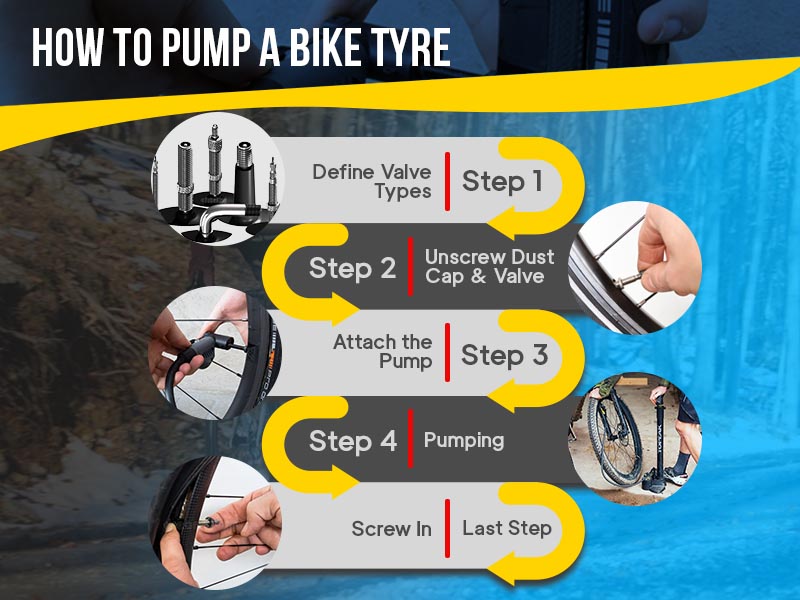
Cycling is an activity that is both healthy and fun. However, knowing how to inflate a bike tyre is fundamental to cycling. For beginners, this can be a little confusing as there are many different types of valves, tyres, and how much pressure to apply. It's actually quite simple and straightforward.
You just need to know how to inflate and use a bike pump correctly. To help you get more understanding, we have provided an easy-to-follow guide below.
Guide to Properly Inflating Bicycle Tyres
A flat tyre can affect your comfort and performance when cycling. It is therefore important for cyclists, especially beginners, to know how to inflate their tyres correctly.
1. Get To Know the Types of Bicycle Valves

Before we look at how to inflate a bike pump tyre, it's important to understand the two types of bike tyre valves, Presta and Schrader.
- Presta valves (high pressure valves, also known as 'French' valves) are often found on high-end bikes and are easy to recognise as they are narrower than Schrader valves. This type of valve also has a locking ring at the top to close the valve.
- Schrader valves are often found on leisure bikes, BMX bikes and children's bikes. The shape of this type of valve is the same as that of a car tyre. The Schrader valve has a wider shape and a round opening at the top. Unlike the Presta, this valve has a spring mechanism in the center to open and close the air passage.
However, remember that each valve is designed differently and often requires a unique connection to the pump head to fit. The Schrader valve connection requires a pin to compress the spring, whereas the Presta valve simply opens via its locking ring.
2. Prepare the Valve

Now that you know the different types of bicycle valve, the next step is to prepare the valve. First, you'll need to remove the plastic cap that covers the end of the valve on your bike (these are often stolen, but that's not a problem).
You can skip this step if your bicycle has a Presta valve, but you will need to unscrew the small lock nut at the top of the valve. When you open this valve you will hear a little air coming out of the tyre, but don't panic, this is normal. If your bike has a Schrader valve, you can skip this step lah.
3. Install the Air Pump
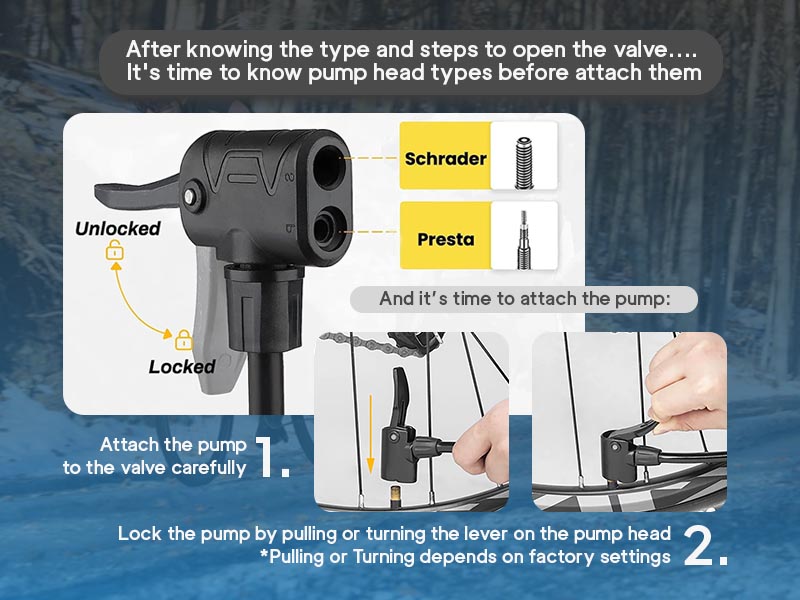
Most pumps on the market today have two connections, one for the Schrader valve and one for the Presta valve. The Presta connector has a narrow opening, while the Schrader connector has a larger opening.
Some bicycle tyre pumps can automatically adjust directly to both types of valves. So it's a good idea to read the instructions first to be sure before using the pump. Once you're sure you can identify it correctly, it's time to connect the valve and start pumping.
If your tyre valve is a Presta type, don’t forget to remove the dust cover first. Then unscrew the jam nut at the top of the valve. If the tyre has a Schrader valve, open the valve cover and connect the pump head to the valve as firmly as possible. Don’t forget to lock the pump by pulling or turning the lever on the pump head.
Note: Pulling or Turning depends on factory settings
4. Start to Pump

The next step is pumping. The thing to consider in this step is to pump your tire vertically and feel the air you push into the tire. Make sure to monitor the psi by checking the gauge. However, if your pump lacks a gauge, you'll need to apply pressure manually.
Inflate the bicycle tyres to the recommended optimum pressure using the pressure gauge on the tool. Generally, the recommended bicycle tyre pressure is
- Around 30-50 psi for MTB tyres
- Around 80-130 psi for road tyres
- Around 25-63 psi for gravel tyres
- Around 40-60 psi for hybrid tyres
Normally, the minimum and maximum inflation pressure (psi) is printed on the side of every bicycle tyre. You need to make sure that the pressure you need is within the manufacturer's recommendations.
Underinflation can be detrimental to the rider, causing the tyre to squeeze, feel spongy when cornering and reduce performance. Inflating beyond the maximum tyre pressure can also affect traction and, in the worst case, cause the tyre to burst from the rim.
If the tyres are still not inflated after a period of pumping, or if they are losing air rapidly, it is likely that your bike's inner tube is punctured and should be replaced immediately.
5. Re-close Tyre Valve

When you have finished pumping and feel that the tyre pressure is correct, remove the pump head from the valve. If your pump has a locking mechanism, you will need to open the lever to the open position and then quickly remove the pump head.
You will hear a hissing sound as you remove it but don't worry, this is compressed air coming from the pump, not the tyre valve.
Close the valve again. On the Presta valve, tighten the small-cap nut clockwise and replace the dust cover. For the Schrader valve, just replace the dust cap.
What Type of Pump Is Needed?
There are generally two types of bicycle pump tyre on the market, track pumps and mini pumps. Track pumps are efficient and easy to use at home. Mini pumps, also known as hand pumps, are more practical because they can be carried on your person.
When buying a cycle pump, check first that it can be used with the type of valve on your bike. Ideally, the pump should work with both Schrader and Presta valves to make things easier for you.
When buying a bicycle pump, check first that it's compatible with your bike's valve type. Ideally, a pump that works with both Schrader and Presta valves offers more versatility.
Rodalink is a great one-stop shop for cyclists! They offer a comprehensive selection, including various bike models (MTB, BMX, road, etc.), spare parts, apparel, and protective gear for riders. Now that you know how to pump your bicycle tires correctly, you can start browsing for the right equipment at Rodalink, including the perfect pump for your bike
If you don't have any pump and plan to have one, you can easily purchase at Rodalink. They offer a comprehensive selection for cyclists, including various bike models (MTB, BMX, road, etc.), spare parts, apparel, and protective gear for riders. Now that you know how to pump your bicycle tires correctly, you can start browsing for the right equipment at Rodalink.
- Topeak Peak DX II Mini PumpMYR 136.00


DISCOVER MORE QUALITY BIKE PUMP

Please complete your information below to login.
Sign In
Create New Account