Toggle Nav 



How to Pump Your Bike Tires in 5 Easy Steps

If you were asked if you could pump up a bike, most people would say you could. Those who are not professional cyclists will find it difficult and confusing to change an inner tube while cycling. Properly inflated bicycle tyres will give you the best results, such as maintaining the correct tyre pressure for safer and more comfortable cycling, even on winding or rocky roads.
In addition, there are many types of bike pump that you should know about if you are a beginner starting. So here is a guide to the correct way to inflate your bike tyres.
5 Steps For Pump Bicycle Tyres
A flat tyre can affect your comfort and performance when cycling. That is why it is important to know how to inflate your bike tyres correctly. Here is the complete guide on how to pump bicycle tyres.
1. Get To Know the Types of Valves

The first step, starting with the basics, is to get to know the types of valves found in bicycle tyres. There are generally two types of valves found on bicycles, the Presta valve and the Schrader valve.
-
Presta valve
This valve is thinner and has a syringe-like shape. The pump hole for the Presta valve is generally smaller and requires a special adapter.
To find out what type of valve your bike has, look at the type of bike. Presta valves are usually found on mountain bikes and road bikes. This type of valve tends to be narrower and the stem length varies.
-
Schrader valve
This valve is thicker and shaped like a car bonnet. The pump hole for the Schrader valve is larger and can be connected directly to the pump without an adapter.
Schrader valves are found on BMX bikes and are shaped just like car tyres. Most bicycle pumps can be used for Schrader valves without the need for an adapter. Therefore, the pump you use should match the valve type of your bicycle tyre.
2. Open Close & Dust Valve
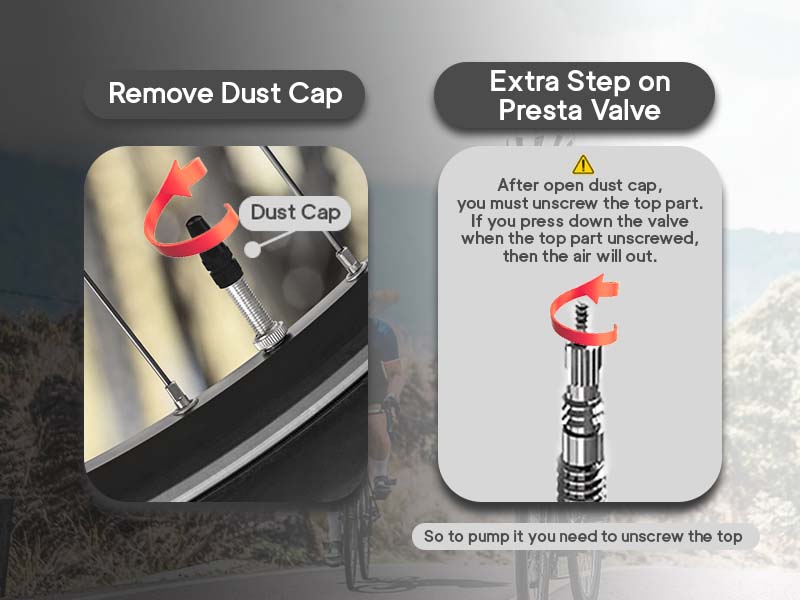
The next step is to open the plastic cap on both the Presta and Schrader valves. However, on the Presta valve there is an additional step of unscrewing the lock nut located at the bottom of the valve. This cap should not be lost as it prevents dirt from entering the valve.
If your bike has a Presta valve, you will also need to unscrew the lock nut. Turn the Presta valve before fitting the pump, whereas the Schrader valve does not have a lock nut.
3. Install the Pump
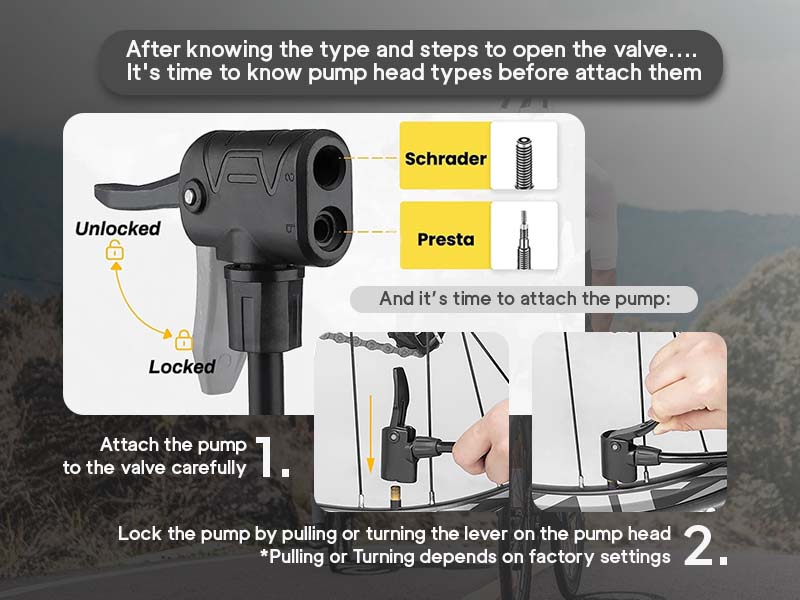
The next step is to install the bicycle pump by connecting the pump head to the valve by pressing and turning it clockwise. Several types of pumps can be used, namely floor pumps and hand pumps.
A floor pump is a great option to keep in your garage, ready to use whenever you need it at home. It has a large capacity and can inflate bicycle tyres to a maximum of 160 psi. The hand pump, on the other hand, is a compact, portable pump that you can take with you when cycling. If you're used to long-distance cycling and are a beginner, a hand pump is a worthwhile investment.
Typically, hand and floor pumps have two nozzle holes suitable for Schrader and Presta valves. To install, place the pump on the valve, make sure the correct nozzle hole is selected, and push the pump towards the valve. Remember to secure the pump by either pulling or rotating the lever on the pump head. Please note that the specific action required may vary depending on the factory settings.
4. Start Pumping

Once the bicycle pump is securely attached to the valve, it's time to start pumping. If you have a floor pump, simply place your feet on the sides and start pumping with both hands. For hand pumps, use one hand to hold the nozzle on the valve and the other hand to pump. Especially for hand pumps, buy one with a pressure gauge, as not all hand pumps have one.
Another thing to look out for is the minimum and maximum tyre pressure (psi) on the side. Make sure that the pressure you are pumping is within the manufacturer's recommendations.
Usually, the ideal bicycle tyre pressure is:
- MTB tyres: around 30-50 psi
- Road tyres: around 80-130 psi
- Gravel tyres: around 25-63 psi
- Hybrid tyres: around 40-60 psi
Your weight can also be taken into account to determine the ideal tyre pressure. If you are light, the pressure will be at the lower end of the recommended psi range. If you are heavier, use the higher pressure. Simple tips when you're pumping up your bike tyres:
- Inflate the tires gradually, not all at once.
- Avoid overinflating the tyres as this can cause them to burst.
- If the tyres feel hard, stop pumping and check the tyre pressure.
5. Inserting Screws
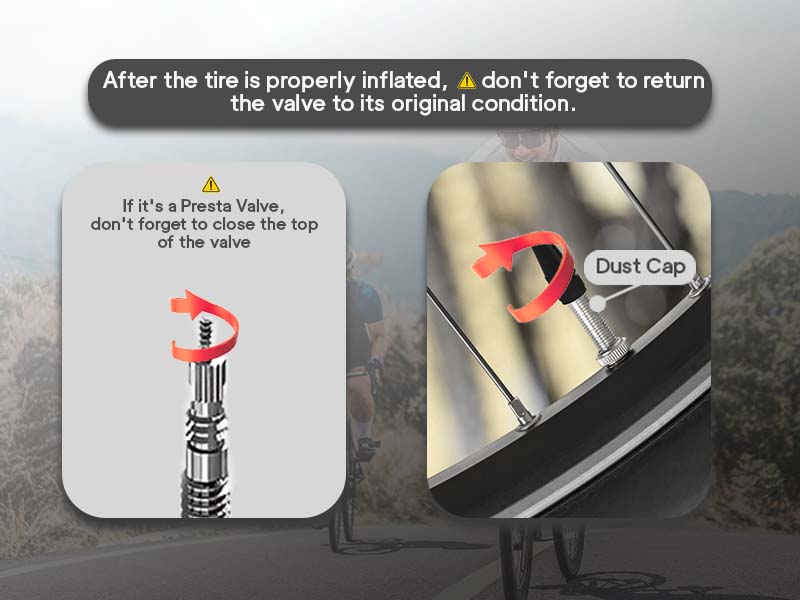
When you feel the tyre pressure is correct, the next step is to release the pump. Push the lever back down and pull the nozzle out of the valve. If you hear a little air coming out when you release the pump, don't panic. This is normal and will not affect the tyre pressure change.
On the Presta valve, turn the lock nut clockwise to close the valve, replace the plastic dust cap and dust the valve. If the Schrader valve is lighter, put the plastic dust cap back on the valve. Your bike should now be back on the road and the tyres should feel firm again.
Tips for Maintaining Bicycle Tyres
Maintenance of bicycle tires is often overlooked, especially by beginners. Even if a tire appears undamaged, small sharp objects like stones or glass might be embedded, posing a risk during rides.
It's crucial to regularly inspect your tires. After each ride or before your next one, check for any debris stuck in the tire treads. Remove these objects carefully to prevent punctures and ensure a smoother ride.
Choosing the Right Bicycle Tyre Pump
Selecting the appropriate pump depends on your valve type (Presta or Schrader). Floor pumps are ideal for home use as they are more stable and easier to inflate tires with. Hand pumps or a compact mini pump are compact and portable, making them a good choice for carrying on rides in case of a flat tire.
By following these steps and tips, you can ensure your bike tires are properly inflated for a safe and enjoyable ride. Now that you're equipped with this knowledge, it's time to find the perfect pump for your needs! RODALINK offers a wide variety of high-quality bicycle pumps, including both floor pumps and hand pumps, to suit any budget and riding style. Visit their website or head to your nearest Rodalink store to browse their selection and find the perfect pump to keep your tires rolling smoothly.
- Topeak Pocket Rocket DX II Mini PumpSGD 39.00-30%Special Price SGD 27.30
- Topeak HybridRocket HP Mini Hand PumpSGD 79.00-31%Special Price SGD 55.30


DISCOVER MORE BIKE PUMP QUALITY

Please complete your information below to login.
Sign In
Create New Account