We use cookies to make your experience better. To comply with the new e-Privacy directive, we need to ask for your consent to set the cookies. Learn more.
























Behind the Hybrid Bike Special Geometry
Hybrid bikes are often chosen for daily riding because they feel easy, comfortable, and intuitive from the first pedal stroke.
What many riders don’t realize is that this ride quality doesn’t come from components alone, but from the foundation of the bike itself: hybrid bike geometry.
Designed specifically for real-world conditions, this geometry balances comfort, control, and efficiency in a way that road bikes and mountain bikes simply don’t.
Why Hybrid Bike Geometry Stands Out?
1. Upright Riding Position
One of the most defining traits of hybrid bike geometry is its upright riding position. The frame places the rider in a neutral posture rather than a forward-leaning stance, allowing the upper body to stay relaxed throughout the ride.
This design reduces strain on the neck, shoulders, and lower back, which is especially important for daily commuting and longer city rides. An upright position also improves visibility, making it easier to read traffic, spot hazards, and ride confidently in urban environments.
For many riders, this comfort-first posture is what makes a hybrid bike feel approachable and easy to live with.
2. Shorter Reach & Higher Stack
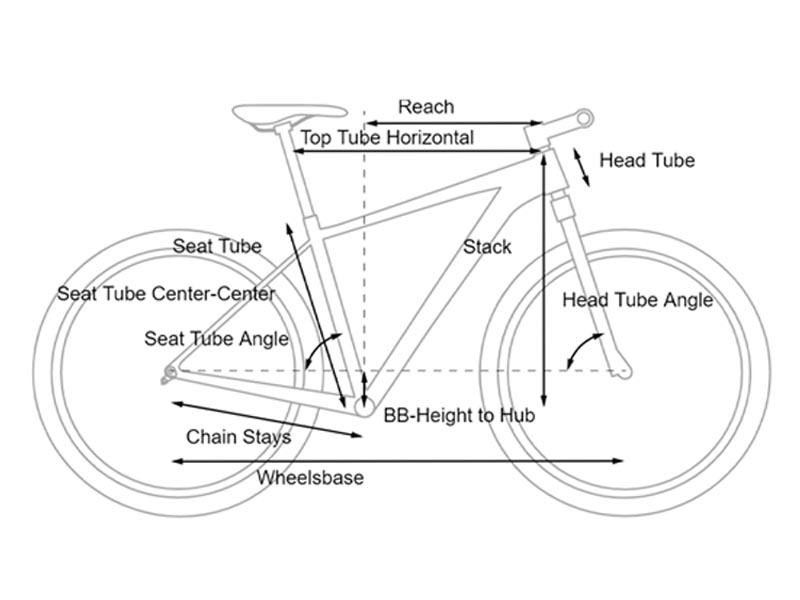
Hybrid bikes typically feature a shorter reach and a higher stack, created by a shorter top tube and a taller head tube. This means riders don’t need to stretch forward aggressively to reach the handlebars.
In practice, this geometry results in:
- Better control at low speeds
- Less pressure on the hands and wrists
- A more relaxed riding posture during stop-and-go riding
This aspect of hybrid bike geometry is particularly beneficial for beginners, fitness riders, and anyone who prioritizes comfort over aggressive positioning.
3. Stable, Predictable Handling
Rather than prioritizing quick, race-oriented steering, hybrid bike geometry focuses on stability and predictability. Steering feels calm and controlled, helping riders maintain confidence on bike paths, rough pavement, and uneven city roads.
This stable handling makes hybrid bikes forgiving and easy to manage, even for riders who don’t ride every day. It’s a design choice that favors consistency and control over sharp responsiveness.
4. Longer Wheelbase for Confidence and Balance
A slightly longer wheelbase is another key characteristic of hybrid bike geometry. By increasing the distance between the wheels, the bike gains improved balance and stability.
The benefits include:
- Better control at lower speeds
- A smoother ride over imperfect surfaces
- Added confidence when carrying backpacks, panniers, or racks
This makes hybrid bicycles especially suitable for commuting, utility riding, and light touring.
5. Lower Standover Height for Easy Mounting
Many hybrid bikes are designed with a lower standover height, often supported by sloping top tubes. This allows riders to mount and dismount the bike more easily, especially in traffic-heavy environments.
A lower standover height also contributes to a lower center of gravity, improving balance and control. This design detail makes hybrid bike geometry more accessible for a wide range of riders and riding conditions.
The Philosophy Behind Hybrid Bike Geometry

The philosophy behind hybrid bike geometry is simple: design a bike that works for everyday riding, not racing or extreme terrain. Hybrid bikes borrow efficiency from road bikes and stability from mountain bikes, blending both into a balanced, versatile platform.
While the riding position is upright, hybrid geometry still allows proper leg extension for efficient pedaling. This makes hybrid bikes faster and more efficient than traditional city bikes, without demanding the aggressive posture of a road bike.
The result is steady speed, reduced fatigue, and a ride that feels natural across different distances and surfaces.
Hybrid geometry is about adaptability, supporting commuting, fitness riding, errands, and relaxed weekend cycling with equal ease.
Road vs MTB vs Hybrid Geometry (Quick Comparison)
|
Bike Type |
Riding Position |
Handling |
Best Use |
|
Road Bike |
Aggressive, low |
Quick and sharp |
Speed and long-distance |
|
MTB |
Upright but long |
Very stable |
Trails and rough terrain |
|
Hybrid |
Upright and relaxed |
Stable and predictable |
City, fitness, leisure |
This comparison shows how hybrid bike geometry fills the gap for riders who want comfort without sacrificing efficiency.
Hybrid bike geometry is designed around how most people actually ride. It prioritizes comfort, stability, and control while maintaining efficient pedaling for everyday use. For riders looking for a reliable hybrid bicycle that fits commuting, fitness rides, and casual cycling, this balanced geometry makes a real difference.
Explore the hybrid bike Singapore collections available at Rodalink Singapore bicycle shop to find a bike built around geometry that supports confident, comfortable riding every day.
Hybrid bike recommendations you might like