Toggle Nav 


How to Adjusting and Maintaining Your Bicycle Braking System
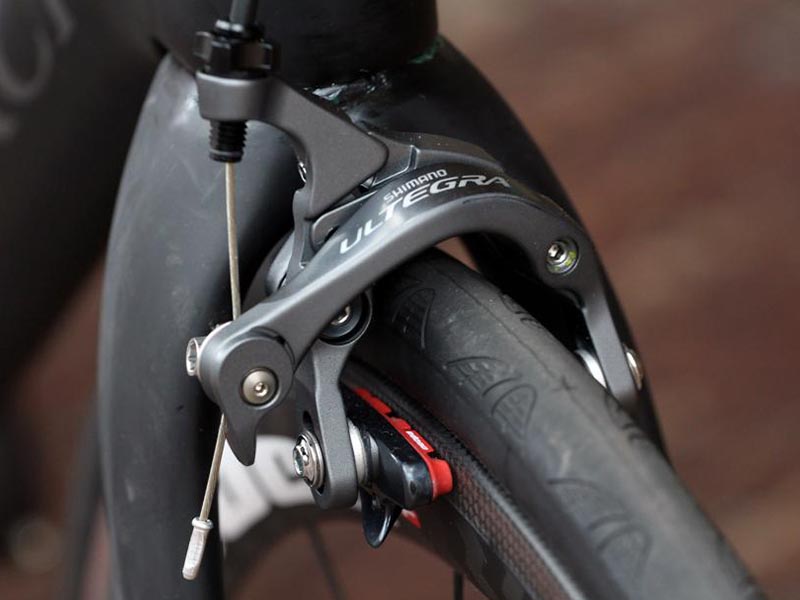
Cycling is a fun and healthy activity, but safety should always be your top priority. In the cycling world, the importance of a well-functioning braking system cannot be overstated.
Whether you're cruising down city streets, tackling mountain trails, or zooming along winding roads, the ability to control your speed and come to a safe stop is essential for both performance and safety. That's why understanding how to adjust and maintain your bike's brakes is crucial for every cyclist.
Why Adjust Your Bicycle Brakes is Important?
Brakes are a vital component of any bicycle, especially for safety reasons. Before delving into the specifics of brake adjustment, it's important to understand why it's necessary in the first place. Over time, regular use and exposure to various elements can cause your bike's brakes to become less effective. Factors such as cable stretch, pad wear, and brake caliper alignment can all contribute to diminished braking performance.
By regularly maintaining your brakes, you ensure that they operate at their optimal level, providing reliable stopping power when you need it most. Properly adjusted brakes not only enhance safety but also improve the overall riding experience by instilling confidence and control.
The Difference of Disc Brakes vs. Rim Brakes
Before diving into the adjustment process, it's essential to know between the two primary types of bicycle brakes:
1. Disc Brakes
Utilize a rotor attached to the wheel hub, which is clamped by a caliper housing brake pads. This design offers powerful and consistent braking performance, particularly in wet or muddy conditions. However, disc brakes require precise alignment and periodic adjustment to maintain optimal function. This type of brake is commonly found on mountain bikes, gravel bikes, and racing bikes.
2. Rim Brakes
On the other hand, employ brake pads that directly grip the wheel rim to create friction and slow down the bike. While rim brakes are simpler in design and adjustment, they may suffer from reduced effectiveness in wet conditions and can wear down the wheel rims over time. This brake model can be found on folding bikes and road bikes.
6-Step Guide: How to Adjust Your Bike Brakes
To determine if you need a brake pad replacement, keep an eye out for the following signs. If you notice any of these, inspecting and adjusting your brakes promptly is crucial to ensure safe riding conditions.
- It reduced braking power or effectiveness.
- Squealing or squeaking noises when braking.
- Excessive play or looseness in the brake lever.
- Uneven wear on brake pads or visible damage.
Now that we've covered the emergency signs of your bike brakes. Let's walk through the process step by step to adjust the brake:
1. Feel the Tightness of Your Brakes
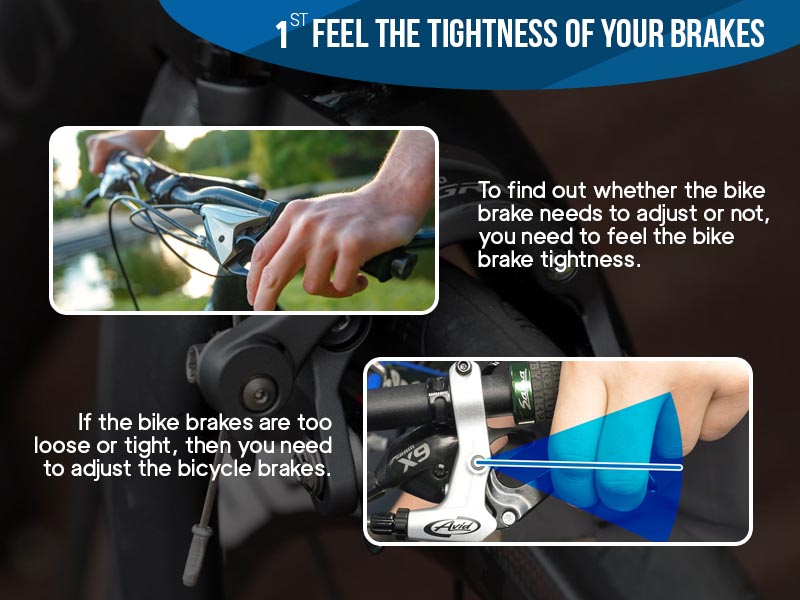
Before making any adjustments, squeeze the brake levers to assess the current tension and responsiveness of your brakes. When it is too tight or too loose, you need to adjust your brake. The ideal brake lever should squeeze around three to four centimeters from the starting position and not touch the handlebar.
2. Tightening the Barrel Adjuster
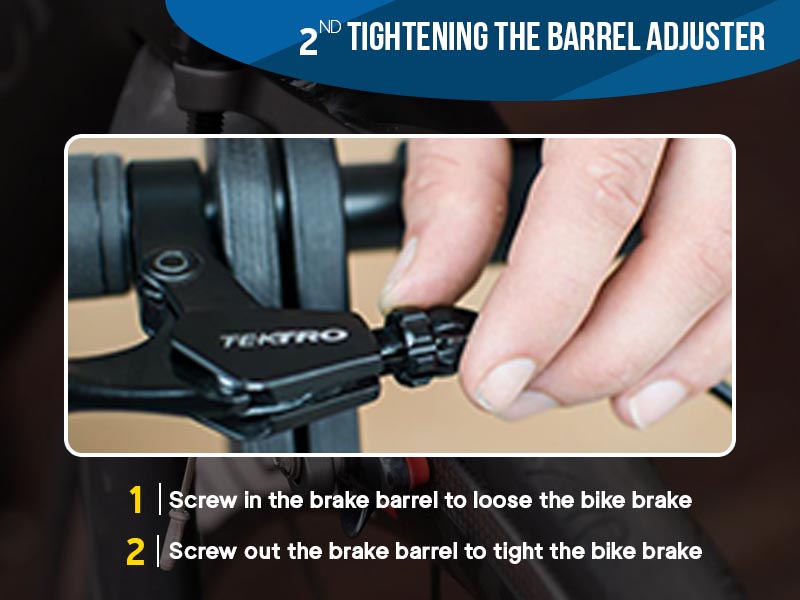
The barrel adjuster, typically located where the brake cable enters the brake lever, allows for fine-tuning of cable tension. Turn the barrel adjuster clockwise to tighten the brake cable and increase braking power, or counterclockwise to loosen it.
At this moment you also need to Check the rubber boot. If it’s damaged or it becomes hard then remove or replace it. Also, check the pads for wear. If they are worn unevenly or beyond the wear line, then replace them. The same for cable for corrosion and fraying.
3. Loosening the Brake Caliper Bolt
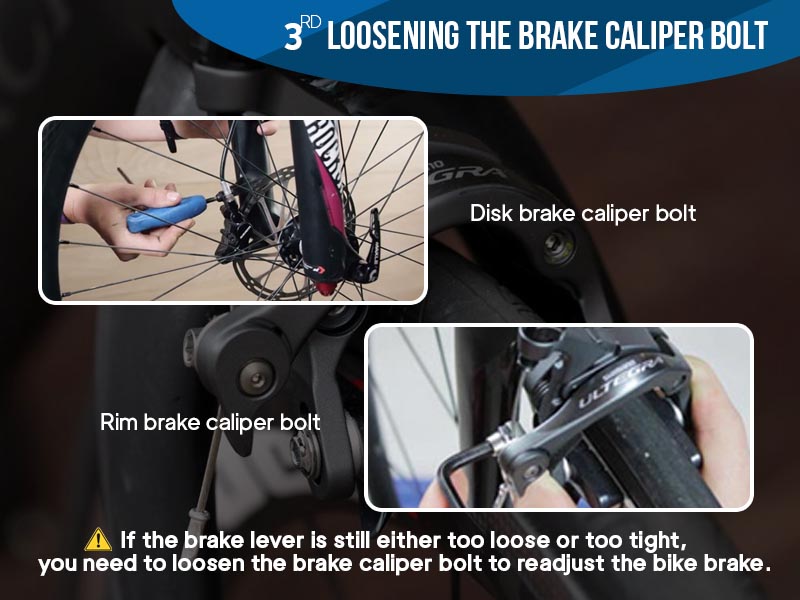
If your brake lever remains either excessively loose or tight despite adjusting the barrel adjuster, you'll need to use an Allen Key to loosen the cable from the caliper by turning it counterclockwise. However, be cautious not to completely remove the bolt from the brake caliper, as this will necessitate reassembling the brake, which can be time-consuming.
4. Adjust Brake Cable
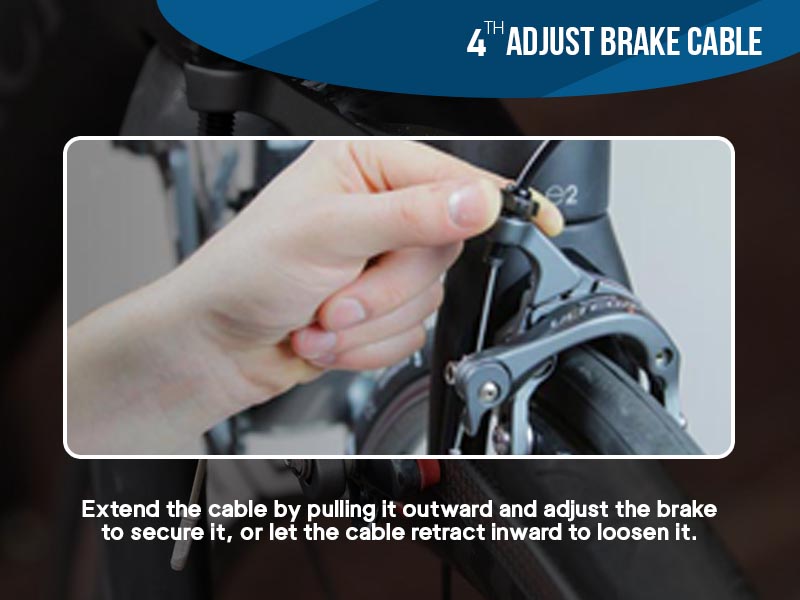
Next, check the cable for corrosion and fraying, and replace it with a new one if necessary. After that adjust the brake cable tension by either tightening or loosening the cable. If your bicycle utilizes a v-brake, it's essential to ensure that the brake pads are positioned a few millimeters away from the rim, preventing them from getting too close.
In the case of disc brake bicycles, it's important to leave adequate space for the lever to move when tightening the cable. Ensure it doesn't retract far enough to contact the caliper, otherwise, the brake pads won't engage with the rotor properly, obstructing braking.
5. Tightening the Caliper Bolt Back
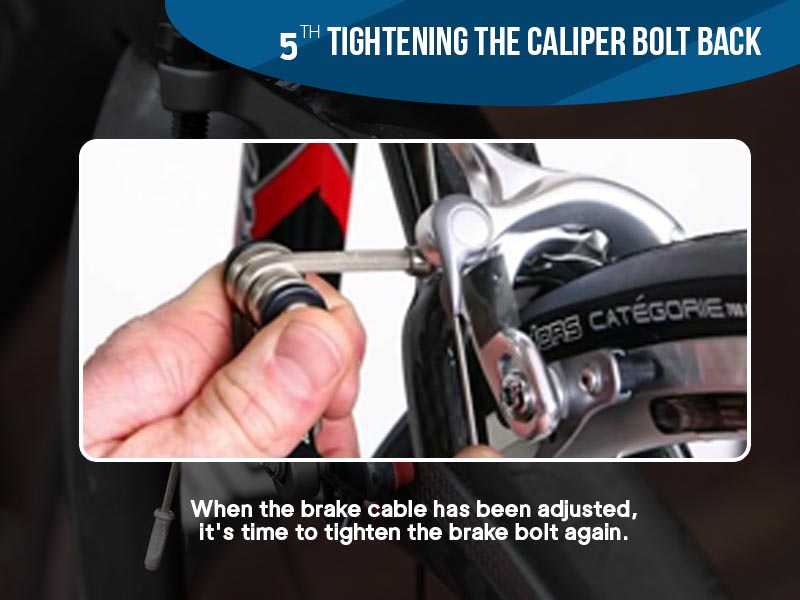
Once you've made the necessary adjustments, tighten the brake caliper bolts securely to maintain the desired position and alignment. Be sure to check for any play or movement in the caliper before proceeding.
6. Adjust Brake Caliper
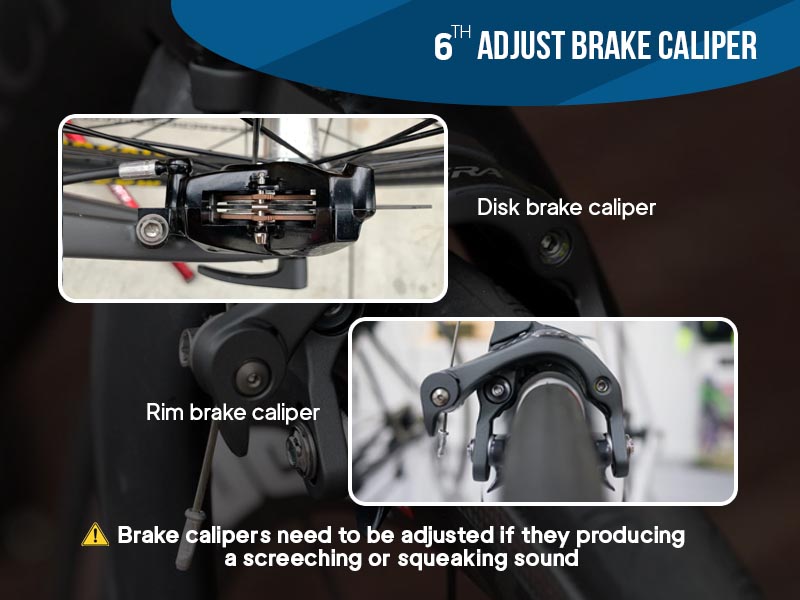
In addition to modifying the brake cable, you have the option to adjust your brake caliper, particularly the dual-pivot caliper, by centering your brakes and verifying whether the brake pads are evenly positioned relative to the rim. Here are the steps to accomplish this:
-
V-Brake
For bikes equipped with V-brakes (also referred to as rim brakes), adjust the position of the brake pads using the provided adjustment screws or washers. Ensure that the pads make full contact with the rim surface without rubbing excessively.
If you notice your brakes pulling or loosing to much, making screeching sounds, or feeling uneven during your ride, it's time to adjust or replace them. Here's what you need to do:
- Inspect the brake pads;
- Pull the brake levers to identify where adjustments are needed;
- Secure the brake pads in place and loosen the bolts;
- Shift the brake pads into the correct positions
- Tighten the brake pad bolts.
-
Disc Brake
Now let's move on to adjusting bike disc brakes after finishing with rim brakes. Disc brakes, like v-brakes, consist of two parts, but they include a metal disc rotor positioned at the wheel's center or hub.
Unlike v-brakes, where you can easily see worn-out brake pads, it's harder to detect this with disc brakes. That's why regular maintenance is essential. Here's how to do it:
- Turn your bike upside down so it rests on the handlebars and saddle;
- Check if the rotor inside the brake caliper is unevenly spaced; if so, adjust the caliper;
- Spin the wheel to check for signs of bent rotors.
If the rotor is unevenly spaced and needs adjustment, follow these steps:
- Loosen the top and bottom bolts of the caliper just enough to prevent them from falling apart;
- Spin the wheel and firmly pull the brake lever to align both pads with the rotor;
- Release the brake lever and spin the wheel to ensure the caliper remains in place between the brake pads;
- If the brake isn't evenly spaced, loosen the bolt and reposition it until it's correct.
Conclusion
Knowing how to adjust your bicycle brakes is essential for every cyclist. By understanding the principles of brake operation and following the steps outlined in this guide, you can ensure your bike's braking system remains in top condition, providing reliable performance and safety on every ride.
If you're unsure about any part of the adjustment process, consult a qualified bike mechanic for assistance. Don't worry, you can seek help from a professional service at Rodalink.
You can visit your nearest Rodalink Malaysia store for servicing, maintenance, or adjustments. Not only for your brakes but also for other components of your bike. Alternatively, if you still want to try practicing it yourself, you can purchase the necessary tools here and give it a go.

Please complete your information below to login.
Sign In
Create New Account